AI cost optimization
Understand exactly where your AI budget goes, reduce unnecessary infrastructure spending, and build unit economics that remain sustainable as usage grows
This is where AI growth becomes financially unsustainable
Without clear cost visibility and a practical optimization plan, every increase in AI usage creates more financial uncertainty. That is the problem we help you solve.
01 / 05
COST
Infrastructure costs outpace revenue
AI infrastructure costs scale faster than revenue, increasing cost per user and putting growing pressure on margins.
02 / 05
VISIBILITY
Teams can't see what scale will cost
Teams lack visibility into cost per interaction, cost per user, and expected costs at 2×, 5×, or 10× scale.
03 / 05
CONTROL
Infrastructure is in someone else's hands
Heavy reliance on third-party AI providers leaves companies with limited control over how infrastructure costs evolve.
04 / 05
PREDICTABILITY
AI bills remain unpredictable
Monthly bills from OpenAI, Anthropic, Google, and other vendors remain unpredictable and difficult to control.
05 / 05
ARCHITECTURE
Early decisions become recurring costs
Early architectural decisions — including model choice, caching, and fallback strategies — now generate significant recurring expenses.
Turn unpredictable AI spending into sustainable unit economics
Understand what every AI interaction costs, see how spending changes as usage grows, and identify the highest-impact opportunities to reduce infrastructure costs.
Understand AI costs before optimizing them
Audit, model, and improve your AI infrastructure so every technical decision supports sustainable margins, predictable spending, and scalable product growth.
Phase 1
AI Cost Audit
Phase 2
Optimization Implementation
We evaluate your current data landscape and identify everything required to support AI before implementation begins.
Deliverables:
- Audit of existing data sources, systems, and integrations.
- Data quality and completeness assessment.
- AI readiness assessment highlighting risks and priorities.
- Data strategy and architecture recommendations.
- Roadmap for the data engineering work required to support AI features.
As a result
For the CEO
A comprehensive view of AI spending, predictable cost projections, and a prioritized optimization roadmap that enable confident budgeting and investor conversations.
For the CTO
A complete breakdown of infrastructure cost drivers, architectural bottlenecks, vendor dependencies, and a prioritized implementation plan for reducing AI costs.
We implement the highest-impact technical changes to reduce AI spending while preserving the quality and reliability of your product.
Deliverables:
- Model replacement or fine-tuning using cheaper alternatives where quality holds
- Caching and inference optimization to reduce redundant API calls
- Prompt optimization that lowers token usage without degrading outputs
- Local model deployment on the client’s own infrastructure
- Infrastructure right-sizing based on actual AI workload patterns
- Cost monitoring and alerting to prevent future spending surprises
As a result
For the CEO
Lower AI operating costs, healthier unit economics, and predictable infrastructure spending that scales sustainably with business growth.
For the CTO
An optimized AI architecture with efficient models, lower infrastructure overhead, reduced vendor dependency, and continuous cost monitoring.
Phase 1
AI Cost Audit
We evaluate your current data landscape and identify everything required to support AI before implementation begins.
Deliverables:
- Audit of existing data sources, systems, and integrations.
- Data quality and completeness assessment.
- AI readiness assessment highlighting risks and priorities.
- Data strategy and architecture recommendations.
- Roadmap for the data engineering work required to support AI features.
As a result
For the CEO
A comprehensive view of AI spending, predictable cost projections, and a prioritized optimization roadmap that enable confident budgeting and investor conversations.
For the CTO
A complete breakdown of infrastructure cost drivers, architectural bottlenecks, vendor dependencies, and a prioritized implementation plan for reducing AI costs.
Phase 2
Optimization Implementation
We implement the highest-impact technical changes to reduce AI spending while preserving the quality and reliability of your product.
Deliverables:
- Model replacement or fine-tuning using cheaper alternatives where quality holds
- Caching and inference optimization to reduce redundant API calls
- Prompt optimization that lowers token usage without degrading outputs
- Local model deployment on the client’s own infrastructure
- Infrastructure right-sizing based on actual AI workload patterns
- Cost monitoring and alerting to prevent future spending surprises
As a result
For the CEO
Lower AI operating costs, healthier unit economics, and predictable infrastructure spending that scales sustainably with business growth.
For the CTO
An optimized AI architecture with efficient models, lower infrastructure overhead, reduced vendor dependency, and continuous cost monitoring.
See cost-efficient AI architecture in action
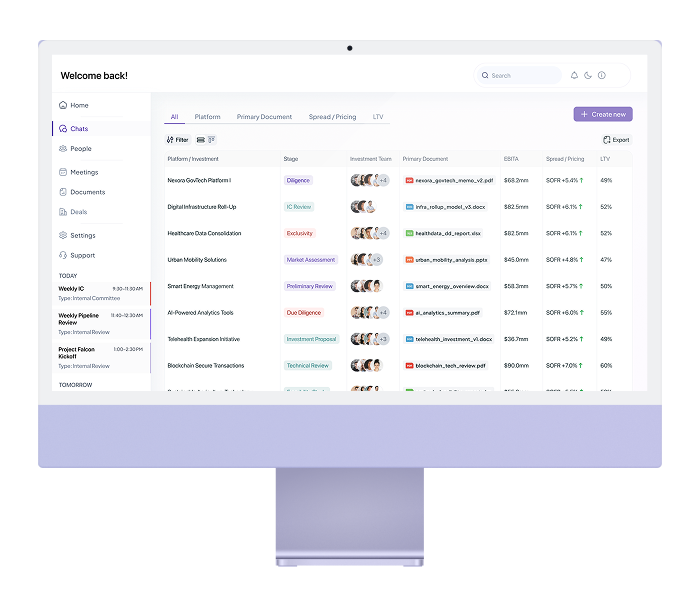
AI-powered CRM for private equity investors
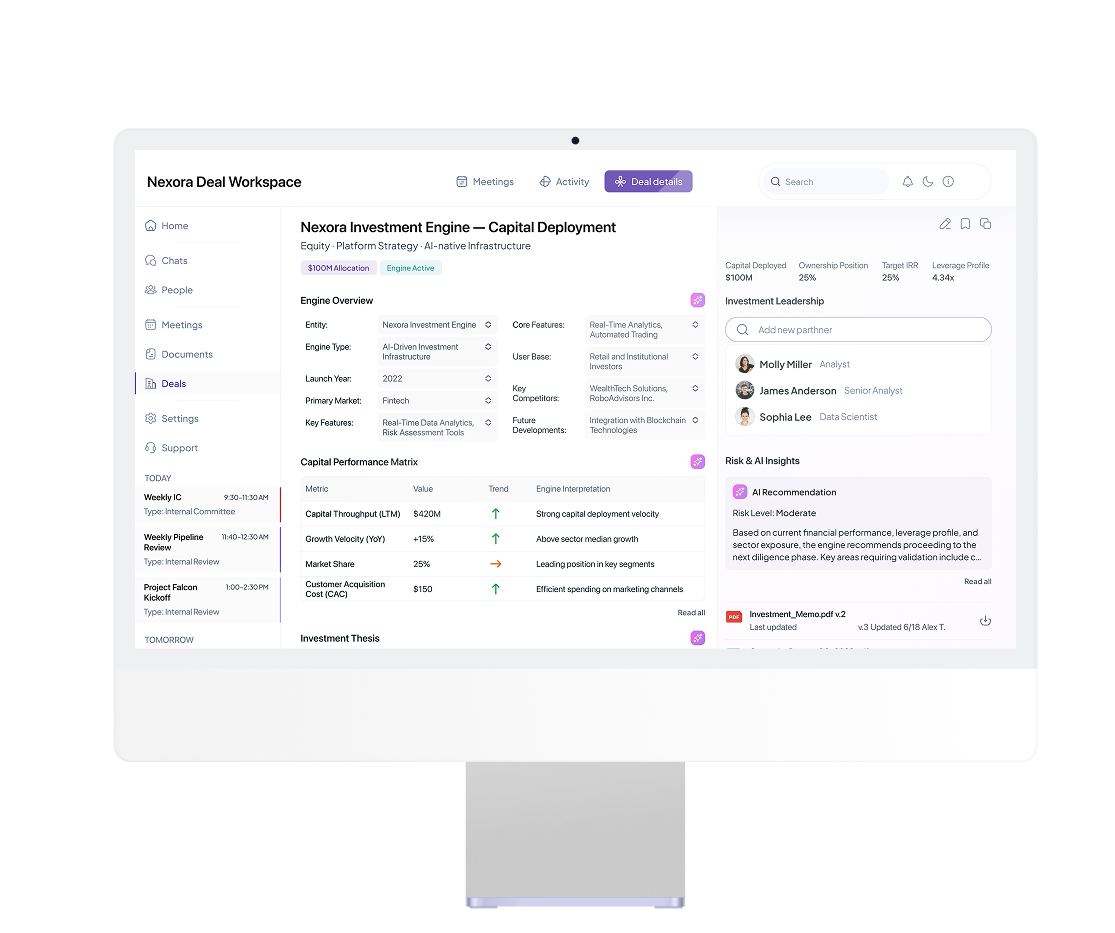
An AI-first CRM platform designed to automate document analysis, extract key investment metrics, and enable faster deal evaluation and benchmarking.
Fragmented workflows and manual data processing are replaced by a unified system that combines document processing, AI insights, and decision support on a single platform.
Industry
FinTech
Location
USA
Services
Business impact:
- 65% reduction in time spent on investment research
- 10× faster deal screening and benchmarking
- 40% improvement in deal conversion performance
- Scalable workflows without increasing analyst workload
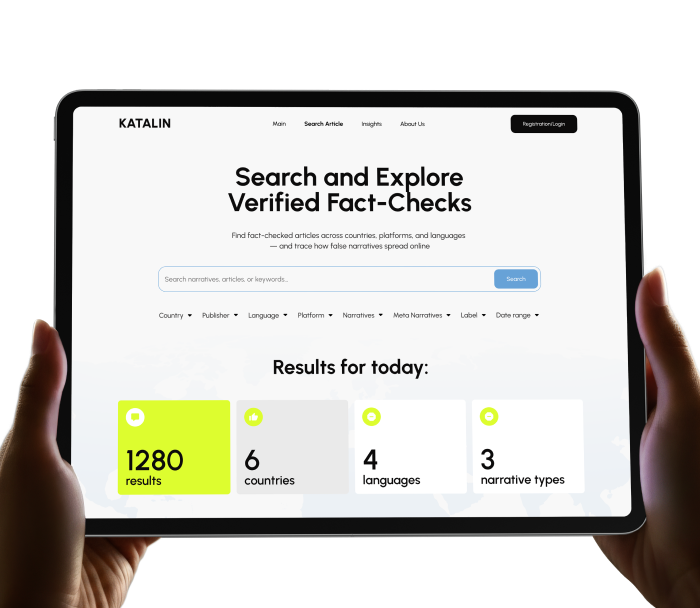
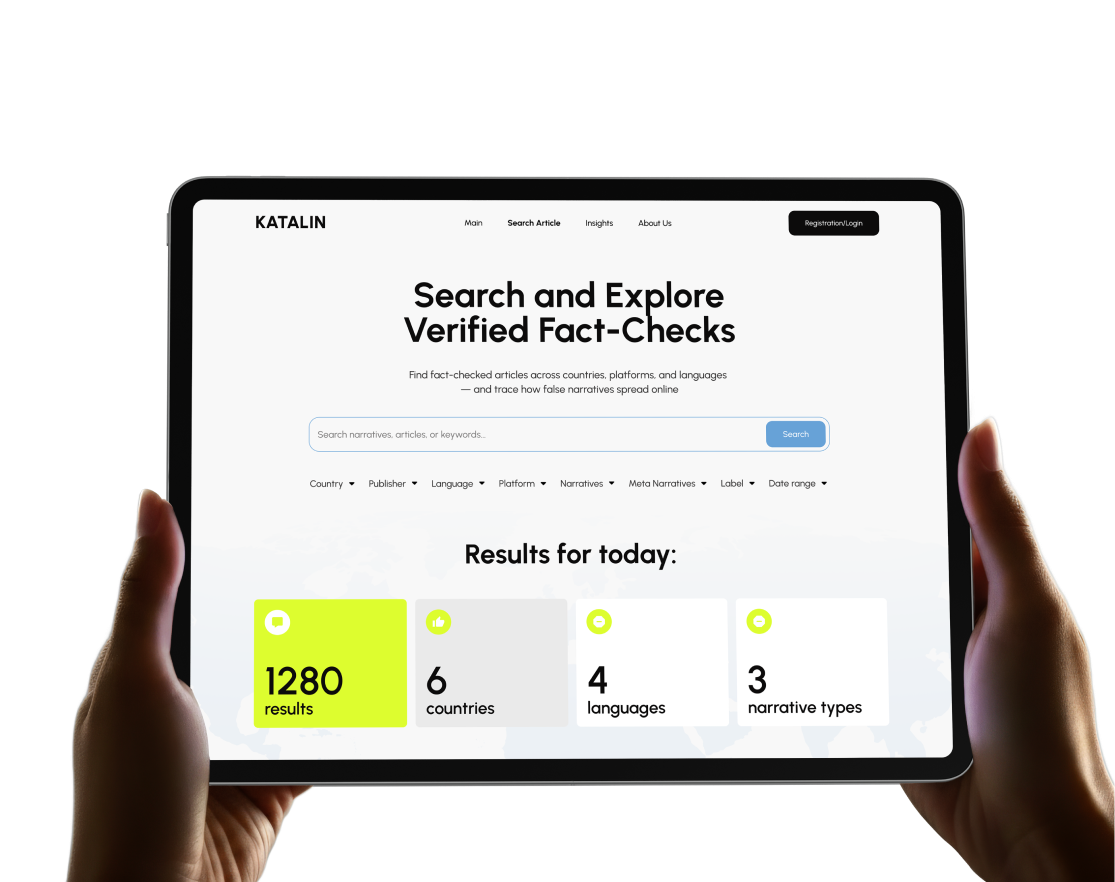
AI-powered disinformation monitoring platform
An AI-powered platform for detecting, analysing, and tracking disinformation across multiple sources in real time. Manual monitoring and fragmented data sources are replaced with automated ingestion pipelines, AI-based detection, and structured analytics workflows that support scalable content analysis.
Industry
Media
Location
Europe
Services
Business impact:
- 60% reduction in manual content review workload
- 97% improvement in content verification accuracy
- Real-time monitoring across 4+ platforms and 50+ sources
- Scalable system supporting up to 10M daily content checks
Make your AI economics
ready to scale
Discover where your AI budget is going and which changes can reduce it. In one conversation, we will discuss your architecture, identify likely cost risks, and outline the next steps toward predictable AI spending.
AI Cost Optimization
that scales with revenue
Sustainable AI economics means understanding what every interaction costs, how spending changes with usage, and which architectural choices protect margins without reducing product quality.
Every AI feature has a measurable cost per interaction and user
Expensive API calls and redundant compute are actively reduced
Infrastructure spending can be explained by workload, model, and vendor
Model choices balance output quality with operational cost
Costs at 2×, 5×, and 10× usage are modeled in advance
Leadership can confidently explain AI unit economics to investors
Why clients
choose YTC
Identification of hidden cost drivers
AI bills show total spending, but rarely explain which models, features, users, or workflows create it.
We break costs down into measurable components.
Cost optimization without quality loss
Reducing AI spend only works if product performance remains reliable. We identify where models, prompts, caching, and infrastructure can be optimized without degrading outputs.
Cost modeling at higher usage levels
We project AI spending at 2×, 5×, and 10× current usage, giving leadership a clear view of how today’s architecture will affect future margins.
Reduction of third-party vendor dependency
We assess where smaller, local, or alternative models can replace costly third-party APIs while maintaining the quality the product requires.
Continuity from audit to implementation
The engineers who analyze your AI architecture can also implement the selected optimizations, preserving context and reducing the risk of ineffective handoffs.
Continuous AI cost control
Monitoring, alerting, and infrastructure controls help prevent future cost surprises as AI usage and workloads grow.
Every month without cost visibility makes AI harder to scale
The cost of AI Cost Optimization is determined. The cost of fixing inefficiencies after scale is unpredictable.
AI spending grows faster than revenue, putting increasing pressure on gross margins.
Unpredictable third-party API bills make financial planning and forecasting less reliable.
Poor model selection and missing caching create unnecessary recurring costs every month.
Cost problems discovered after growth require more expensive architectural changes.
Vendor dependency increases while the company loses control over its AI economics.
Every new AI feature adds spending without a clear understanding of its financial return.
Investors receive unclear answers about long-term infrastructure requirements.
Frequently Asked Questions
Which factors are increasing our AI spend?
AI costs often increase because of model choice, excessive token usage, redundant API calls, overallocated compute, or architecture that was not designed for scale. The audit identifies which factors are driving your spending.
What does the AI Cost Audit include?
It includes a complete cost breakdown, cost-per-user and cost-per-interaction analysis, projections at higher usage levels, vendor dependency risks, and a prioritized optimization roadmap with estimated savings.
Will this reduce our dependency on OpenAI or Anthropic?
It can. We assess where local models, smaller models, or alternative providers can replace expensive APIs while maintaining the quality your product requires.
Can you reduce costs without lowering AI quality?
Yes. Every recommendation is evaluated against the required product quality. We only replace models, reduce tokens, or change infrastructure where the expected output remains reliable.
Can we start with the audit only?
Yes. Phase 1 is a fixed-price engagement that gives you full visibility into current costs and a prioritized plan.
How long does it take?
The AI Cost Audit takes approximately two to four weeks. Optimization implementation typically takes four to eight weeks, depending on the architecture and selected initiatives.